
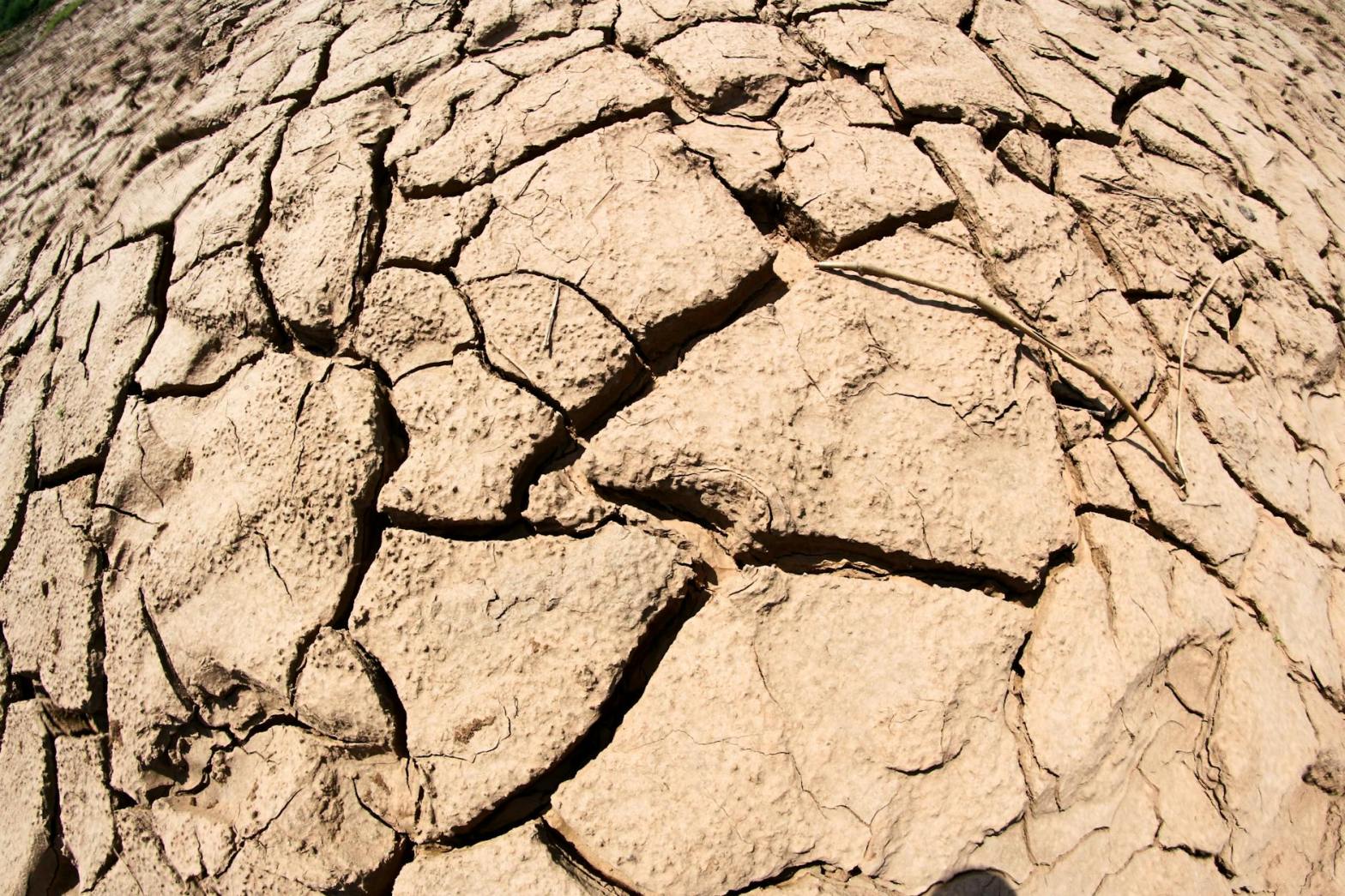
By the second week without rain, the ground had begun to show its seams. Hairline cracks at first, then wider ones that caught the edges of boot soles and held them a moment too long. Livestock gathered at the troughs earlier each morning, standing with the uneasy patience of creatures that know more than the people tending them. The air had a way of thinning by afternoon, as if the valley were being asked to breathe less.
Inside the farmhouse, the adults spoke in a half-lowered register meant to suggest calm. It fooled no one. The new sensors installed by the state had returned a sequence of codes no one could decipher, alternating between a blinking red icon and the word ERROR that pulsed like a reminder. The tap in the kitchen hissed before it produced anything. When it did, the water came out in a narrow thread that tasted faintly of metal.
He came in from stacking hay to find his father and two neighbors standing over the kitchen table, the electronic tablet set between them like a verdict. Someone muttered that they might have to haul water in. Someone else said the wells hadn’t failed in forty years. Then a third voice—half joking, half not—said, “If the machines won’t tell us, she might.”
No one laughed. They all looked at the boy.
“She listens better than any monitor,” his father said. “And she’ll need someone to walk the line with her.”
The boy nodded before he fully understood what had been asked. It was easier than arguing, and there was truth to what his father said: the wells lay far apart, and he was young enough to reach them all before dusk.
He slept lightly. At dawn, the ground held a dull coolness that wouldn’t last. He walked the mile to her house along the old service road, past fence posts that leaned as if the land had shifted under them.
She opened the door only after finishing whatever task she’d been doing. Her movements were unhurried but precise, near to the way people acted when they’d learned to pace their days without rushing for anyone else’s comfort.
“You’ll do,” she said, taking in his height, his boots, the rope slung over his shoulder his father had insisted he bring.
Then she stepped back from the doorway, allowing him to enter.
She led him through a narrow hall into a kitchen that looked assembled rather than decorated. A folded oilcloth covered the table. A tin of bolts and washers sat beside a small coil of twine. On the counter, a metal bucket rested upside down to keep dust out, its handle wrapped with worn cloth to spare the knuckles. Nothing felt arranged for show; everything had a use.
She checked the rope he carried, giving it one firm pull that tested both strength and honesty. She shouldered it, then lifted her own coil from a hook near the stove, its fibers darker from years of water and weather.
“You’ll take the lighter one,” she said. Not a kindness—just accuracy.
He nodded, adjusting it over his shoulder. She watched him long enough to confirm he’d done it correctly.
Outside, the early light caught on the grass with a faint, temporary sheen. She stepped off the porch first, walking toward the service road with the ease of someone moving along a route she’d traveled for decades.
“First well’s a ways off,” she said without turning. “We’ll start there.”
He fell in beside her, steadying the rope as they began the long walk out.
The first well sat behind what used to be a tenant house, its foundation now only a low rectangle of stone softened by weeds. The well’s circular wall rose from the ground as if it had been placed there with more necessity than care, stones fitted without mortar, edges rounded from years of buckets being pulled against them.
She stopped a few paces away and studied it the way someone might regard an old acquaintance whose face had changed but whose habits hadn’t. Then she motioned for him to bring the lighter rope forward.
“Set the hook there,” she said, pointing to a notch worn into the rim. He crouched, fitting the hook in place. The notch looked accidental, but the way she nodded made it clear it had been made on purpose, by someone who had known what they were doing.
She handed him the bucket. “Lower it slow.”
He eased the rope through his hands, the fibers warming his palms. The bucket descended steadily, scraping once against the stone before finding open air again. She tilted her head slightly, listening—not with dramatic intention but with the quiet practiced attention of someone who had long ago learned to trust their ear.
When the bucket met the water, the sound was softer than he expected, a muted shift rather than a splash. She closed her eyes briefly, as if measuring a distance.
“Nine feet,” she said. “Maybe a little more.”
He glanced at the faint markings cut into one of the stones—nearly gone, but still legible if you looked for them. The estimate matched. He didn’t comment. She didn’t need him to.
“Pull it up,” she said. “Then we’ll see the others.”
He wrapped the rope twice around his forearm and began to lift, the weight rising clean and certain through his grip.
They followed the fenceline for nearly a mile before reaching the second well. The ground dipped there, the grass shorter from cattle that had once been kept in the adjoining field. Now the field stood empty except for a line of rusted troughs and a mineral block crumbling at one corner. The well itself was a square of poured concrete, practical and unremarkable, the kind of structure built when people still believed permanence came from straight lines and poured forms.
She tested the corner with her boot before asking for the rope. He lowered the bucket, listening as she had taught him, though he tried not to make a show of it. The sound took longer this time, and when the bucket found the water, it met a surface too close to the bottom.
“Shallow,” she said quietly. “Shallower than last season.” There was no alarm in her voice, only assessment, the way someone notes the shortening of days.
They moved on. The sun had begun to gather strength, loosening the thin coolness that had held overnight. He adjusted the rope on his shoulder, and she noticed.
“You’ll wear through your shirt like that,” she said. She reached over and turned the coil slightly so the weight distributed differently. “Let it settle here. Less rubbing.”
He murmured thanks. She gave no reply, already scanning the rise ahead of them where the third well waited.
This one sat behind a stand of young maples, their leaves pale with thirst. The stones around the well were older, fitted tightly, the surface of each smoothed by years of use. She placed her hand on one of them before speaking.
“Your grandfather patched this well the summer the spring went irregular,” she said. “You were small then. Barely walking.” She didn’t say it sentimentally. It was simple record, something catalogued in the course of a working life.
He lowered the bucket while she listened. The sound that rose from below was different again—neither shallow nor steady—but carrying a faint heaviness he didn’t know how to name. She nodded once, as if confirming something she’d already suspected.
“Salt’s coming up,” she said. “It never used to. But land shifts. Water follows.”
He pulled the bucket up, careful not to tip it. She wiped her hands on her trouser leg and looked toward the far ridge.
“One more,” she said. “It’s the deepest. We leave it for last.”
They fell into step together, neither speaking, the rope swinging lightly between them as they made their way toward the ridge.
The final well lay at the far end of the ridge, where the land gathered itself before dropping into a narrow basin. He had been there once as a child, though only vaguely remembered the place—an impression of coolness, a low ring of stones, and his father’s hand keeping him from leaning too far.
Now the well seemed larger than he recalled, its stones darker from years of shade, the opening marked by a faint indentation in the grass where countless feet had stood. She approached with a kind of reserved regard, not reverence, but recognition.
“This one holds longest,” she said. “Always has.”
She didn’t take the rope from him this time. Instead, she stepped slightly aside, handing him the heavier rope and giving him the clear line to the rim. He looped the coil once around his wrist for steadiness and eased the bucket over the edge. The drop felt deeper before the rope even began to slacken.
“Let it down in one run,” she said. “Don’t check it. It confuses the sound.”
He released the rope steadily, feeling the faint vibration as the bucket descended into the dark. The air rising from below was cooler than anywhere they had been that morning, as if the well were holding on to a season the rest of the valley had begun to lose.
The bucket met the surface with a gentled shift, almost a hesitation. He felt it before he heard it—an altered weight traveling back up the rope into his hands. He waited, as she had shown him, counting silently, though he wasn’t sure what the count measured.
Behind him, she remained still, watching him rather than the well.
“Tell me,” she said.
He didn’t speak right away. The sound below was layered, carrying more depth than the others, a steadiness that wasn’t abundance but endurance. When he did answer, it came without strain.
“Ten feet,” he said. “Maybe ten and a little.”
She nodded once. Not a correction. An acknowledgment.
They began the walk back along the ridge, the light now fuller, the heat settling in without apology. Neither spoke for a while. There was nothing to solve between them, only the steady return across land that had given its answers for the day.
Halfway down the slope, she slowed, placing a hand on her hip in a way that suggested fatigue rather than frailty. He offered to take her rope; she shook her head once, lightly.
“You’ll go on to the rest another day,” she said. “No need for me to follow every step.”
He wasn’t sure whether she meant it as permission or instruction. It didn’t matter. The knowledge had already taken root in the way he carried the coil, the way he marked the ground without thinking.
When they reached the service road, she paused, looking out toward the valley—the fields, the scattered roofs, the places she had known long enough to read without walking. Her expression didn’t shift, but something in her posture settled, as if confirming a decision she had made before morning.
“You listen well,” she said. “That’s all it ever was.”
Then she turned toward her house. He continued on, following the slight slope downward. At the bend in the road, he stopped, drawn by an impulse he didn’t question. He stepped off the gravel, walked a few paces into the field, and came to where a small spring bubbled and sent a thin trickle toward the lower ground.
He crouched, lowered his head, and listened.
The sound rose to meet him—quiet, steady, unhurried—and he read it back into the quiet.

Lleyton Michael Kane is a 12th-grade student at Mount de Sales Academy in Macon, Georgia. His short story, “Staring Beyond Kings and Gods”, earned second place in the 2024 GISA State Creative Writing Competition. His poetry has appeared in Howl Magazine and Journal of Necessary Fiction, and his prose was published by Fiction Attic Press. In 2025, his poem “The Right to Possible” received first prize in the Renee Duke Youth Poetry Award.
 Dr. Parton's Literacy In Place