
First a note from Chea: I met Kathleen Jacobs through my first foray into social media posting when I began Literacy In Place. She was an instant supporter of my work and I of hers. She has written a number of books for young people that reflect the experiences of rural young people and their communities. When she reached out to see if I’d be interested in publishing something of hers, I of course said yes without hesitation.
I really appreciate the way cataloging the characteristics and traits of her rural place make it come alive. But my favorite part is her welcome invitation and encouragement for rural writers to pull up a chair and tell their stories. It feels especially significant as I work through the wonderful submissions I received for the Rural Teen Writing Contest. So, without further preamble, here’s the piece:
Harvesting the Seeds of Storytelling
by Kathleen M. Jacobs
It is through place that we put our roots, wherever birth, chance, fate or our traveling selves set us down.
Eudora Welty
One of the most verdant beginnings of storytelling (in addition to hearing a character’s unique, yet familiar, voice) is the vision of a place: a crumbling house, an underground mine, a boisterous carnival midway, a dark basement, or a city or rural America. And if the seeds are nourished properly, place grows into a sort of character in and of itself. And that’s when you know you’re getting close to a solid core whose myriad spokes can begin to satisfy not only the writer but, equally important (and perhaps even more), the reader. And that’s when place begins to invite the writer to let its magic in through every nook and cranny.
As a writer who has lived in rural West Virginia most of her life, there’s a gentle but certain and very pronounced whisper that leads me always to the hills and valleys of a region known for its rich storytelling. It is not the din from my travels to America’s big cities that beckons me. Instead, it is the silent path I walk through the woods every day, imagining stories to be written, discovering nature’s treasures found floating in a babbling brook: autumnal-colored leaves, smooth pebbles, bird feathers, a honeycomb, walnut shells, and tiny acorns. It’s also the voices from bickering households and snakes slithering through the forest bed, and a mountainside whose beauty has been marred by discarded refuse. It all matters, as the story unfolds to determine which rises to the surface or how they meld one to the other. Like each of us, place too has its own personality, quirks, and foibles. It has a heart and a soul and a spirit and a way of planting its own seeds within a story.
When I moved from St. Louis to rural West Virginia with my family as I was coming-of-age, I had been writing stories for a few years. The simple act of grabbing a writing tablet and a handful of sharpened pencils brought a sense of euphoria that fed my imagination. I knew that there would be an ample supply of fodder from simply absorbing my physical world: the rich Appalachian dialect, the luscious wood setting that ran parallel to our house, the sounds from the river that carried coal-laden barges, and the fierce political underpinnings that were never satiated. And as time marched on, I became ravenous for stories written by authors who had reaped the benefits from a soil rich for storytelling: Pinckney Benedict, Breece D’J Pancake, Denise Giardina, Barbara Kingsolver, Lee Smith, Dorothy Allison, Silas House, and Homer Hickam. I yearned to be in their company, and I was certain that they had laid out the welcome mat, as do I for you. There is always room.
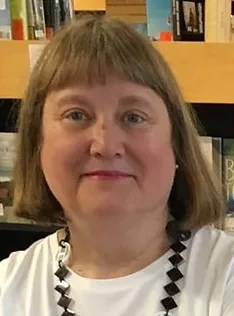
Kathleen M. Jacobs is the author of Honeysuckle Holiday and other books for young readers. She lives in the Appalachian Region and can be reached at www.kathleenmjacobs.com.
 Dr. Parton's Literacy In Place