
It’s the end of September. Here in Indiana, the leaves are starting to turn. My burning bushes are starting to flame and there are periods of cool weather that allow me to wear hoodies – at least in the morning, anyway. And all of that together means that school is back in session.
ABOUT THIS MONTH’S THEME: BACK TO SCHOOL
When we originally talked about collaborating, Kendra and I discussed our backgrounds and the importance of young folks getting to see their stories and experiences in books, and how we didn’t really have that opportunity. For each of us, not seeing our realities reflected on the page became one of the major driving forces behind the work that we’re doing. So, we felt a Back-to-School theme for our kids lit collaboration was in order.
We also recognize the intensive emotional and mental labor that teachers and librarians do to show young folks the joy and importance of reading, and wanted to give them a shout-out and show our support—especially with the increased rash of book challenges and bannings on the rise. So a big and heartfelt digital hug and thank you to the teachers and librarians working to show students who they are is important and helping them find places they can see themselves, their realities, their hopes and desires represented and acknowledged and honored on the page.
BOOK RECOMMENDATIONS
With school on the brain, I tried to select books that took place in Appalachia and the characters’ experiences as learners/in school played a major role in the story. Since one of the biggest stigmas surrounding rural and Appalachian people is that we are all uneducated, ignorant, and backward, representations of rural and Appalachian kids and their experiences as learners feel really important.
Young Adult Recommendation: Funny How things Change by Melissa Wyatt

Funny How Things Change takes place in rural West Virginia deep in the Appalachian Mountains. In it, we follow Remy Walker whose family settled in Dwyer more than 160 years ago and have their own mountain and holler named after them. Remy is torn between getting out by following the girl he loves as she goes to college and staying in the place that has always felt like part of him. Through interactions with both insiders and outsiders, Remy grapples with knowing he should want to leave and wanting to be with Lisa but also wanting to stay to be a steward of the land his family’s been on for more than a century. Wyatt’s stunning novel addresses issues and dominant narratives of class, adolescence, rurality, family, pride, linguistic justice, and success.
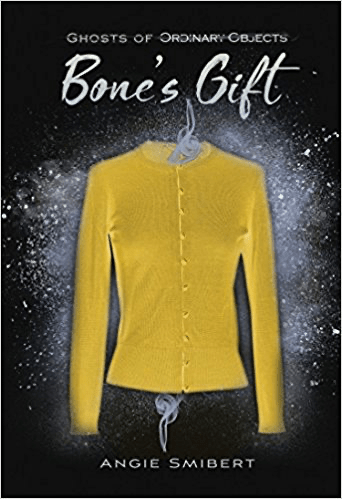
Middle Grades Recommendation: Bone’s Gift (Book 1 in the Ghosts of Ordinary Objects series) by Angie Smibert
Bone Phillips lives in a Virginia coal-mining town in 1942 and has reached the age when most of the members of her family discover their Gift. Hers is object reading—she can see the stories and memories that were important to folks who interacted with that object. For example, she can read the death of a deer in an arrowhead, the pain of a beating in a baseball cap, and joy and dancing in a fiddle. When she receives a note that says her mama is dead because of her Gift, Bone tries to uncover the truth. She wants to read her mama’s butter-yellow sweater, but is afraid of what she’ll see. Could Bone’s gift be the death of her too? A book full of Appalachian folklore and history, Bone’s Gift illustrates the importance of folk-learnin’ as well as book-learnin’.
Picture Book Recommendation: That Book Woman by Heather Henson and Illustrated by David Smalls

That Book Woman is a beautiful tribute to the dedication of the Pack Horse Librarians who helped innumerable children and adults find a lifetime love of reading. Not only did they bring the books, but many of them taught their patrons how to read them. This particular book tells the story of Cal who would rather do farm chores than read books. It’s not that he hates stories, just that he doesn’t much care to sit still and has trouble making sense of the chicken scratch. At first he thinks that book woman is foolish to endure the difficult ride through the mountains and all kinds of weather, just to bring his sister some books, but then again, if she’s willing to face all that difficulty, maybe reading is more important than he originally thought. That Book Woman illustrates just how difficult access to knowledge was for folks, and just how hard they were willing to fight to get it.
Check out the latest Read Appalachia Podcast. and learn more about Read Appalachia at https://www.readappalachia.com/
Follow Read Appalachia on Instagram, Twitter, and Facebook @readappalachia.
Follow Kendra on Instagram and Twitter @kdwinchester.
 Dr. Parton's Literacy In Place